Wrong Answers, Right Lessons: How Konya's Mistake-Welcoming Classrooms Are Rewriting the Rules of Academic Growth
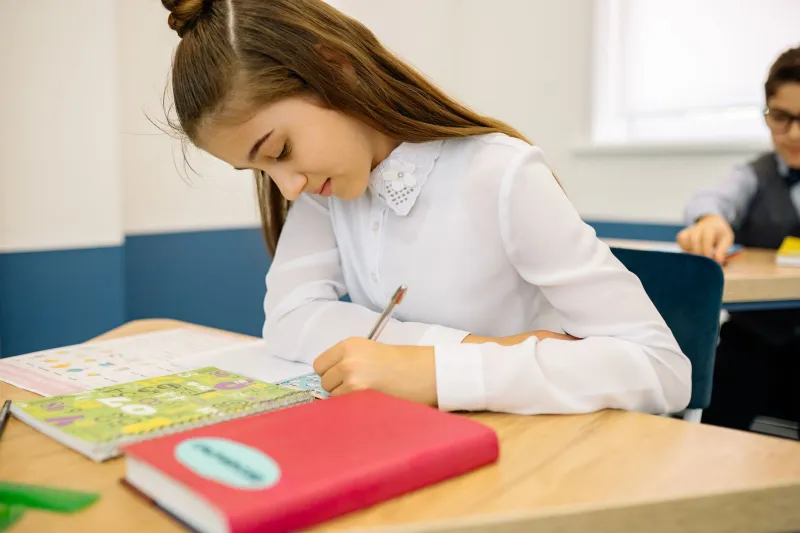
There is a moment most American students know all too well: the stomach-drop sensation of raising a hand, offering an answer, and getting it wrong — in front of everyone. For many, that moment becomes a turning point, but not the kind educators hope for. Rather than doubling down on curiosity, students learn to play it safe. They stop guessing. They stop reaching. They wait until certainty arrives before speaking, which in many academic environments means they stop participating altogether.
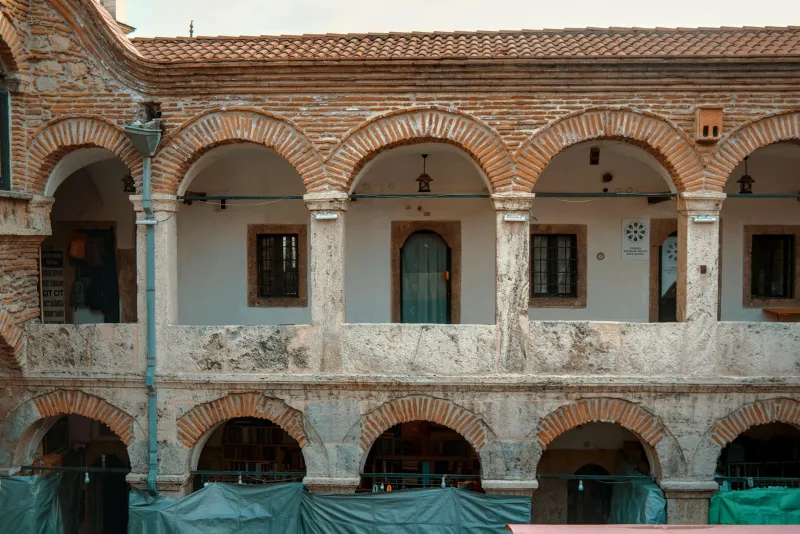
In Konya, Turkey's historic heartland of scholarship and spiritual inquiry, classrooms operate on a fundamentally different premise. Mistakes are not embarrassments to be minimized. They are raw material — the essential grit from which understanding is slowly, deliberately polished.
A Culture Built Around the Value of Effort Over Outcome
To understand why Konya's students approach errors differently, it helps to understand the broader cultural framework surrounding learning in the region. Turkish educational philosophy, particularly as it has been shaped in cities with deep intellectual and religious heritage like Konya, has long drawn from traditions that emphasize the journey of knowledge acquisition rather than the destination of a correct answer.
The concept of sabır — patience — is woven into how Turkish teachers structure academic challenge. Students are not expected to arrive at mastery immediately. Instead, the process of grappling with a difficult problem, sitting with uncertainty, and revising one's thinking is treated as the core of intellectual development. A student who struggles visibly is not seen as underprepared. That student is seen as working.
This stands in sharp contrast to the performance metrics that dominate American K-12 and higher education. From standardized test scores to GPA calculations, US systems are largely structured to reward accurate output. The process — the messy, iterative, mistake-laden process — is rarely what gets graded.
What Neuroscience Says About Getting It Wrong
Interestingly, the pedagogical instincts embedded in Konya's educational culture align closely with what contemporary cognitive science has been uncovering for decades. Research consistently shows that errors, when processed in a supportive environment, activate deeper neural engagement than simply receiving correct information.
When a student makes a mistake and then receives corrective feedback, the brain does not simply overwrite the wrong answer. It engages in a more complex reconciliation — comparing what was expected with what was revealed, building stronger and more durable memory traces in the process. Psychologists refer to this as the hypercorrection effect: the more confident a student was in a wrong answer, the more likely they are to remember the correct one after being corrected.
Konya's educators may not have framed their approach in neuroscientific language, but their practice has long reflected the underlying truth: productive struggle is not a detour around learning. It is the road itself.
The Achievement Trap in American Education
America's relationship with academic achievement is complicated by a cultural narrative that equates speed with intelligence and correctness with competence. From the earliest grades, students receive implicit and explicit messages that being right — quickly — is the goal. Extra credit is awarded for correct answers, not for thoughtful revision. Grades reflect final products, not the quality of the process that produced them.
This achievement orientation creates what researchers sometimes call performance goals rather than mastery goals. Students focused on performance goals are motivated primarily by how they appear to others. Students focused on mastery goals are motivated by genuine understanding. The distinction matters enormously: performance-oriented students tend to avoid challenges where failure is possible, while mastery-oriented students seek out difficulty because they understand that difficulty is where growth happens.
The result in many American classrooms is a quiet epidemic of risk aversion. Students who are perfectly capable of creative, ambitious thinking choose the safe path — the predictable essay topic, the familiar math strategy, the answer they are already sure of — because the cost of being wrong feels too high.
How Konya's Teachers Make Mistakes Safe
So what does it actually look like when a classroom normalizes error? In Konya's educational settings, several practices stand out as particularly instructive for American educators considering a shift in approach.
First, teachers in this tradition frequently model their own uncertainty. A teacher who openly says, "I am not immediately certain — let us reason through this together," communicates something powerful: that intellectual humility is a sign of strength, not weakness. American classrooms, where teacher authority is often tied to demonstrated expertise, rarely offer students this kind of modeling.
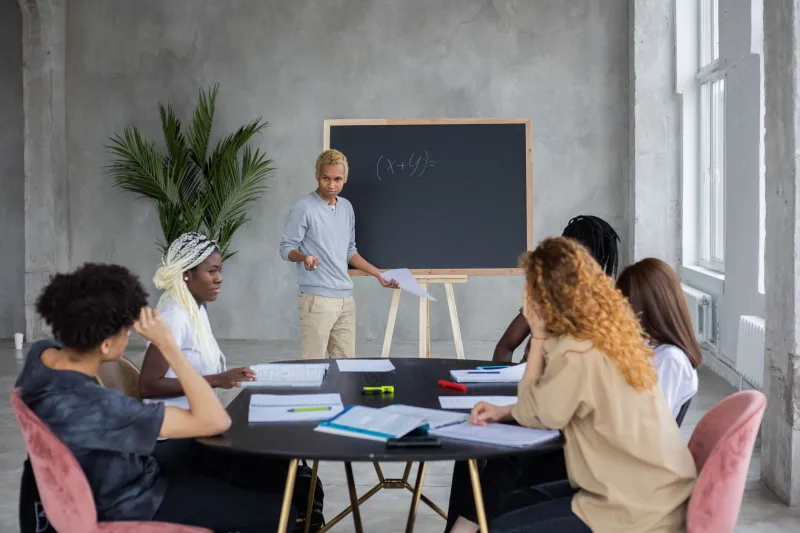
Second, wrong answers in Konya-influenced classrooms are treated as diagnostic gifts rather than disciplinary problems. When a student offers an incorrect response, a skilled teacher does not simply redirect to the right answer. Instead, the error becomes the starting point for a collaborative investigation. Why does this answer seem correct? Where does the logic break down? What does this mistake reveal about how we are thinking about the problem? These questions transform an embarrassing moment into a shared intellectual exercise.
Third — and perhaps most importantly — Konya's educational culture frames revision not as punishment but as the natural rhythm of learning. Rewriting, reconsidering, and returning to a problem are not signs that a student failed the first time. They are signs that a student is taking the work seriously.
Building Resilient Learners for an Uncertain Future
The stakes of this conversation extend well beyond classroom dynamics. The skills that emerge from a mistake-welcoming educational culture — resilience, creative problem-solving, tolerance for ambiguity — are precisely the skills that employers, researchers, and innovation leaders consistently identify as most critical for navigating the modern world.
America's workforce is increasingly defined by problems that do not have clear right answers. Climate adaptation, healthcare delivery, economic equity, artificial intelligence governance — none of these challenges can be solved by students who have been trained to avoid risk and wait for certainty. They require thinkers who are comfortable being wrong, who can recover quickly, revise their assumptions, and try again with greater sophistication.
Konya's educational tradition has been cultivating exactly those thinkers — not by lowering expectations, but by raising them in a direction that American schools have largely overlooked.
A Roadmap for American Educators
Adopting the spirit of Konya's approach does not require a wholesale reinvention of American curricula. It begins with smaller, deliberate shifts. Teachers can start by explicitly naming the value of struggle in their classrooms — not as consolation for failure, but as a genuine pedagogical principle. Assessment structures can be adjusted to reward revision and reflection alongside accuracy. Classroom culture can shift to celebrate the student who asked the hardest question over the one who supplied the fastest answer.
For students, the invitation is equally direct: the next time you get something wrong, resist the urge to retreat. Lean into the discomfort. Ask why. Ask again. The wrong answer you worked through honestly will serve you far longer than the right answer you borrowed from someone else.
Konya's classrooms have understood this for generations. It is a lesson American education is only beginning to learn — and the timing could not be more important.