What American Schools Can Learn From Konya's Sacred Teacher-Student Bond
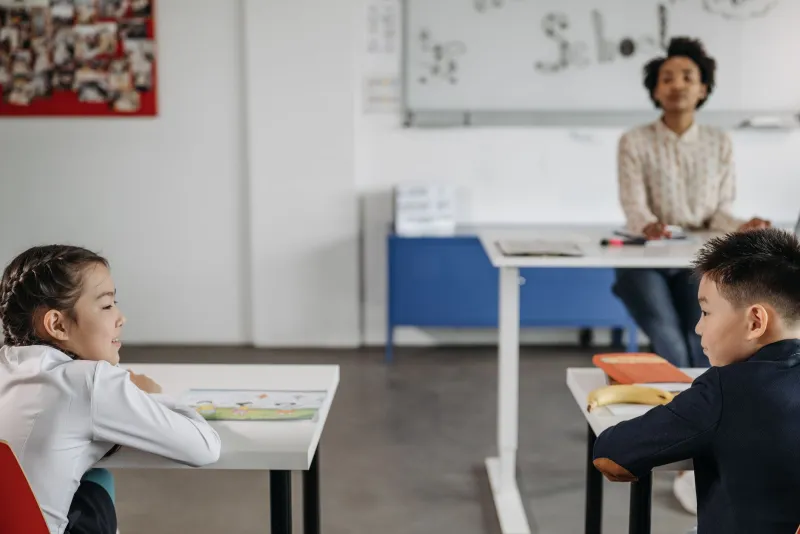
Walk into a classroom in Konya, Turkey, and you will notice something that many American educators describe as almost unfamiliar: a quiet, attentive readiness. Students are not silent out of fear. Teachers are not commanding attention through volume or consequence. Instead, something more subtle — and arguably more powerful — is at work. The relationship between teacher and student, cultivated over time and rooted in mutual regard, does the heavy lifting that no classroom management app or behavioral chart ever quite manages.
For American schools grappling with a deepening engagement crisis — one that has accelerated since the pandemic and shows little sign of resolving on its own — this cultural dynamic deserves serious examination.
A Relationship Rooted in Something Older Than Policy
In Konya's educational tradition, the concept of hoca — a term for teacher that carries spiritual and moral weight far beyond its English equivalent — reflects a worldview in which knowledge transmission is inseparable from character formation. The teacher is not merely a content deliverer. The teacher is understood as a guide, a model, and in many respects, a steward of the student's intellectual and personal development.
This framing has practical consequences. Students arrive with an ingrained understanding that showing respect to a teacher is not compliance — it is participation in something meaningful. And teachers, in turn, carry a felt responsibility toward their students that extends beyond test scores. The relationship becomes reciprocal in ways that formal policy rarely captures.
Maria Chen, a curriculum specialist who spent two years studying comparative education models in Turkey before returning to her district in Ohio, describes the difference plainly. "In the classrooms I observed in Konya, there was this unspoken contract," she says. "The teacher gave their full attention and genuine care. The students gave their focus and effort. Nobody had to enforce it. It was just understood."
Why American Classrooms Are Struggling
The American classroom has never been more resource-rich or more strained. Teachers have access to sophisticated instructional technology, differentiated learning frameworks, and more professional development hours than any previous generation of educators. And yet, teacher burnout is at record levels. A 2023 RAND Corporation survey found that more than half of American teachers reported frequent job-related stress, with classroom management consistently ranking among the primary sources.
Students, meanwhile, are increasingly disengaged. The causes are complex — social media saturation, pandemic-era learning loss, mental health challenges — but beneath all of it lies something relational. Many students do not feel that their teachers genuinely know them. Many teachers feel that students do not respect the learning environment. Both perceptions, when left unaddressed, become self-fulfilling.
What is often missing from the policy conversation is the foundational question: What kind of relationship do we want students and teachers to have, and are our schools structured in ways that actually build it?
Respect Without Rigidity
It would be a mistake to romanticize Konya's model as strict or authoritarian. Educators who have observed it closely are quick to correct that misreading. The deference students show their teachers in this tradition is not rooted in fear of punishment. It is rooted in a cultural narrative that frames learning as a privilege and the teacher as someone who has made a genuine investment in the student's growth.
James Okafor, a high school principal in Atlanta who has incorporated relationship-based classroom principles into his school's professional development program, draws a meaningful distinction. "Authoritarian classrooms produce compliance," he says. "Relationship-centered classrooms produce engagement. Those are completely different outcomes, and you cannot confuse one for the other."
In Konya's learning culture, teachers are also expected to earn and maintain that respect through consistency, preparation, and personal investment in each student. The relationship is not hierarchical in a cold sense — it is hierarchical in the way a mentorship is hierarchical, with warmth and purpose running through it.
Practical Bridges Between Two Systems
For American educators who find this model compelling, the challenge is translation. American classrooms operate within a different cultural context, and no amount of admiration for Konya's traditions will transplant them wholesale into a school in Minneapolis or Phoenix. But several principles can be meaningfully adapted.
Invest in the first two weeks. In many Turkish classrooms, the opening weeks of a school year are spent not racing through curriculum but building the relational foundation that will carry the rest of the year. American teachers who deliberately slow down at the start — learning student names with genuine care, sharing their own learning journeys, and establishing norms collaboratively — report stronger classroom cohesion throughout the year.
Treat the teacher role as a calling, not a job function. This is as much an institutional message as an individual one. Schools that communicate to teachers that their influence extends beyond content delivery — and that support teacher wellbeing accordingly — tend to retain educators who bring that sense of vocation into the classroom.
Make respect bidirectional and explicit. In Konya's model, students respect teachers and teachers respect students. American schools can benefit from making this reciprocity visible: acknowledging student contributions publicly, honoring student perspectives in curriculum discussions, and creating structures where students feel genuinely seen.
Reduce transactional language. When classroom interactions are framed primarily around grades, deadlines, and consequences, the relationship becomes transactional. Introducing language and rituals that emphasize growth, shared inquiry, and mutual investment shifts the emotional register of the classroom.
What the Research Supports
This is not simply a cultural preference — it aligns with a substantial body of educational research. Studies on teacher-student relationships consistently find that students who feel a strong relational connection to their teachers demonstrate higher academic motivation, greater resilience in the face of academic difficulty, and lower rates of chronic absenteeism. The relational quality of the classroom predicts outcomes that instructional technique alone cannot.
Konya's educational culture has been practicing what researchers are now confirming: that the relationship is the curriculum, in a very real sense.
A Different Kind of Revolution
The word revolution tends to conjure images of dramatic disruption. But the shift this article describes is quieter — and perhaps more durable because of it. It does not require new legislation, new technology, or new funding streams. It requires a reorientation of how schools understand the teacher-student relationship and a willingness to invest in the relational conditions that make learning possible.
Konya's classrooms did not arrive at their culture overnight. It is the product of generations of shared understanding about what education is for and who teachers are meant to be. American schools are, in many ways, still working out their own answers to those questions. Looking carefully at models that have already done that work — not to copy them, but to learn from them — is precisely the kind of intellectual openness that education itself is supposed to cultivate.
The engagement crisis in American classrooms is real. So is the burnout. But so, too, is the possibility of something better — built not on stricter rules or smarter apps, but on the oldest foundation in education: the bond between a teacher who genuinely cares and a student who genuinely feels it.