From Konya to the Classroom: How Turkish Pedagogical Traditions Are Reshaping American Education
In recent years, American educators have increasingly sought international models to address persistent gaps in student engagement, critical thinking, and academic achievement. Finland has long been celebrated for its student-centered philosophy, and South Korea's rigorous academic culture has drawn considerable attention. Yet a quieter, equally compelling story is unfolding around the pedagogical traditions practiced in Konya, Turkey — a city with a centuries-old legacy of scholarship and learning.
Konya, situated in south-central Anatolia, is not merely a cultural landmark. It is home to a robust educational ecosystem that has evolved over generations, blending classical Islamic scholarship with modern academic disciplines. Today, educators across the United States are beginning to take notice — and some are actively adapting Konya-inspired methods within their own schools.
A Legacy Built on Collaborative Inquiry
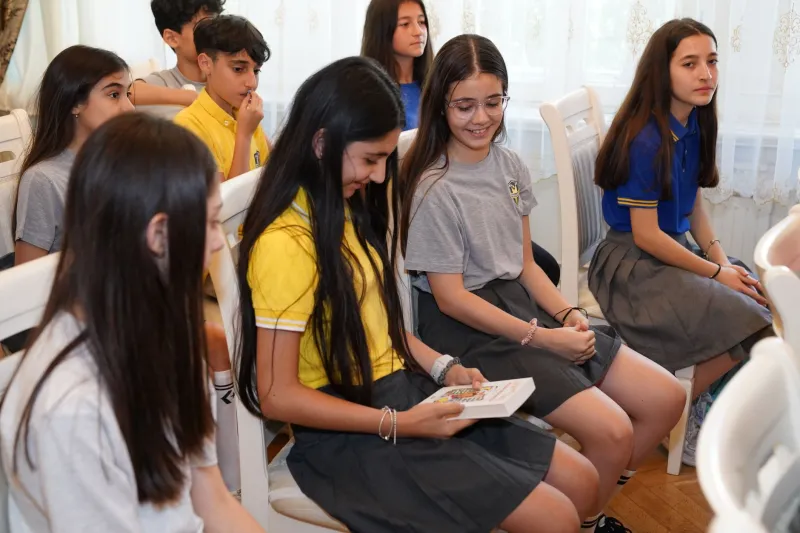
One of the most distinctive hallmarks of Konya's educational tradition is its emphasis on collective intellectual engagement. Rather than positioning the teacher as the sole authority in the room, many Konya-area schools structure learning around group dialogue, peer mentorship, and shared problem-solving. This approach traces its philosophical roots to the medrese tradition — classical Islamic centers of learning — where students were expected to debate, question, and collaboratively construct understanding.
"In our classrooms, silence is not necessarily a sign of focus," explained Ayşe Kaya, a secondary school instructor at a public school in Konya's Selçuklu district. "We encourage students to talk through problems with one another. The conversation itself is part of the learning."
This philosophy resonates strongly with contemporary American research on active learning. Studies conducted by institutions such as the University of Minnesota have found that students who engage in structured peer discussion retain information significantly longer than those who receive passive instruction. Several US teachers who have participated in Turkish-American educator exchange programs report that adopting a more dialogue-driven classroom structure has measurably improved participation, particularly among students who previously disengaged during traditional lectures.
Weaving Cultural Heritage Into STEM Education
Another dimension of Konya's educational approach that has captured American attention is the deliberate integration of cultural and historical context into science, technology, engineering, and mathematics instruction. Rather than treating STEM as a purely abstract or technical pursuit, educators in Konya frequently anchor mathematical concepts and scientific principles in the region's rich heritage — from the geometric patterns of Seljuk architecture to the astronomical contributions of medieval Islamic scholars.
This contextual approach serves a dual purpose: it deepens students' connection to the material, and it demonstrates that STEM disciplines are not culturally neutral but are, in fact, deeply human endeavors with diverse historical roots.
Dana Whitfield, a middle school math teacher in Columbus, Ohio, participated in a professional development exchange program that included visits to Konya-area schools. She returned to her classroom with a new framework for teaching geometry. "I started incorporating examples from Anatolian tile patterns and architectural design," she said. "My students — many of whom had never engaged enthusiastically with geometry — were suddenly asking questions I hadn't heard before. They wanted to understand the math behind the beauty."
Whitfield's experience is not isolated. A number of US educators who have engaged with Turkish teaching methodologies describe similar transformations in student curiosity and motivation when abstract concepts are grounded in compelling historical or cultural narratives.
Student-Centered Problem Solving as a Core Value
Beyond collaborative learning and cultural integration, Konya's schools have long prioritized student agency in the learning process. Rather than presenting students with pre-packaged solutions, instructors are trained to pose open-ended questions and allow learners to navigate toward answers through guided exploration. This approach mirrors what American education researchers call "inquiry-based learning," though in Konya's context it carries a distinct cultural texture rooted in intellectual humility and communal responsibility.
Mehmet Arslan, an educational consultant who has worked with both Turkish and international school systems, describes the underlying philosophy succinctly: "We want students to understand that not knowing is the beginning of knowledge, not a failure. The discomfort of uncertainty is where real learning begins."
For American classrooms grappling with a culture that often equates speed and correctness with intelligence, this reframing can be genuinely transformative. Several US schools that have piloted inquiry-based frameworks inspired by Turkish models report improvements not only in academic outcomes but in students' self-reported confidence and resilience.
Practical Takeaways for American Educators
Adopting elements of Konya's educational philosophy does not require a wholesale reinvention of the American classroom. Educators interested in exploring these approaches might consider beginning with small, deliberate shifts:
- Restructure at least one lesson per week around peer dialogue rather than direct instruction, allowing students to work through problems collectively before receiving teacher input.
- Introduce culturally diverse historical examples when teaching STEM concepts, drawing from non-Western scientific and mathematical traditions to broaden students' understanding of where knowledge comes from.
- Reframe mistakes as essential data rather than outcomes to be avoided, creating a classroom culture in which intellectual risk-taking is celebrated rather than penalized.
- Incorporate reflection periods at the end of lessons, a practice common in Konya schools, where students articulate what they understood, what confused them, and what questions they still carry.
A Mutual Exchange of Ideas
It is worth noting that this exchange of educational ideas flows in both directions. Turkish educators in Konya are equally interested in learning from American innovations in project-based learning, educational technology, and inclusive classroom design. The most productive conversations happening between US and Turkish educators are not transactional but genuinely reciprocal — a shared inquiry into what it means to educate well.
As global connectivity continues to shrink the distance between educational traditions, Konya's rich pedagogical heritage stands as a reminder that some of the most powerful tools for improving American classrooms may have been cultivated thousands of miles away — and centuries ago.
At Konya Eğitim, we remain committed to bridging these traditions and making the insights of Konya's educational community accessible to learners and educators everywhere.