The Dinner Table as Classroom: How Multigenerational Conversations in Turkish Homes Are Raising Sharper Thinkers
The Quietest Classroom in the House
In many American households, the family dinner table has become a battleground of distraction — smartphones competing with side conversations, televisions humming in adjacent rooms, schedules too packed to allow for anything more than logistical debriefs. Yet research in developmental psychology consistently identifies family conversation as one of the most powerful predictors of a child's academic performance, vocabulary development, and capacity for abstract reasoning.
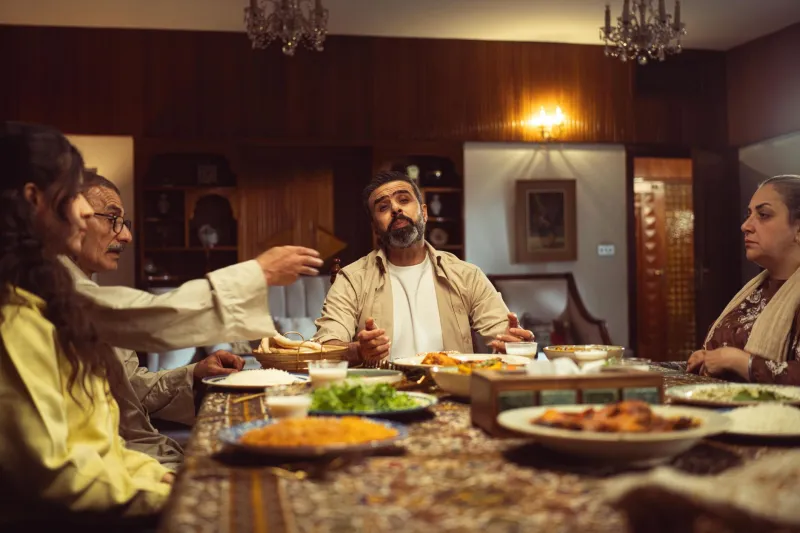
In Konya, Turkey, the evening meal has historically served a purpose that extends far beyond nutrition. It is a space where grandparents, parents, and children gather not merely to eat but to engage — with ideas, with questions, with the events of the day and the lessons of history. This tradition of multigenerational intellectual exchange, woven into the fabric of everyday domestic life, may hold surprising lessons for American families who want to raise more curious, more analytical, and more articulate young people.
A Culture That Asks Questions
Turkish intellectual culture, particularly in historically significant cities like Konya, places considerable value on the capacity to reason aloud. Influenced by centuries of Islamic scholarly tradition, Sufi philosophical inquiry, and a rich oral storytelling heritage, conversations in many Konya households tend to move organically between the personal and the philosophical. A discussion about a neighbor's dispute might segue into a reflection on fairness and justice. A news story about a distant conflict might prompt a grandparent to draw parallels with historical events they witnessed firsthand.
Critically, children are not peripheral to these conversations. They are expected to listen carefully, to ask clarifying questions, and — as they grow older — to contribute their own perspectives. The implicit message is powerful: your opinion matters, but it must be earned through reasoning, not simply asserted.
This expectation cultivates what educators call dialogic thinking — the ability to hold multiple viewpoints simultaneously, to test an idea against counterarguments, and to refine one's position in response to new information. These are precisely the cognitive skills that college professors, employers, and civic institutions increasingly report that young Americans are struggling to demonstrate.
Why American Students Are Losing the Argument
A 2023 survey by the Foundation for Critical Thinking found that a significant majority of college instructors believe incoming students lack the ability to construct a coherent argument or evaluate the credibility of competing claims. This is not primarily a failure of intelligence. It is a failure of practice.
Critical thinking is not an innate trait. It is a learned behavior, developed through repeated exposure to substantive discussion in environments where ideas are taken seriously and where intellectual risk-taking is encouraged rather than penalized. When children grow up in households where complex topics are avoided, where disagreement is treated as conflict rather than dialogue, or where screens consistently replace conversation, they arrive at school and eventually college without the foundational habits of mind that rigorous academic work requires.
The Turkish family table tradition addresses this deficit not through formal instruction but through consistent, low-pressure practice embedded in daily life.
Strategies Inspired by the Konya Model
The good news for American families is that the core principles of this tradition are entirely transferable. No cultural fluency in Turkish is required — only a willingness to be intentional about how conversation unfolds at home.
Bring a question to the table. In many Turkish households, it is common for someone — often an elder — to introduce a topic or pose a question at the beginning of a meal. American families can adopt this practice deliberately. The question need not be weighty; it might be as simple as "What's something you changed your mind about this week?" or "If you could fix one thing about our neighborhood, what would it be?" What matters is that the question invites genuine reflection rather than a yes-or-no response.
Welcome dissent, but require reasoning. One of the most distinctive features of productive intellectual households is that disagreement is not just tolerated — it is expected. When a child disagrees with a parent's view, rather than shutting the conversation down, the parent asks: "Why do you think that? What would change your mind?" This models intellectual humility and teaches children that changing one's position in response to evidence is a sign of strength, not weakness.
Invite the wisdom of older generations. Konya's multigenerational dynamic is not incidental. Grandparents and older relatives carry lived experience that no textbook can replicate. When an elderly family member shares a memory of a historical event, a period of economic hardship, or a community transformation, they are offering children an irreplaceable form of primary-source education. American families should create deliberate space for these voices at the table.
Connect abstract ideas to concrete life. Turkish intellectual tradition tends to move fluidly between the theoretical and the practical. When discussing a concept — fairness, courage, ambition — the conversation naturally circles back to specific people, specific choices, specific consequences. Parents can guide conversations in this direction by following up general statements with grounding questions: "Can you think of a time when you saw that happen?" or "What would that actually look like in real life?"
Read together, then talk. Many Konya families maintain a culture of shared reading — whether of poetry, news, religious texts, or literature — that then becomes fodder for discussion. American families can replicate this by establishing a modest shared reading practice: a short article, a poem, or even a compelling opinion piece read aloud before or after a meal, followed by open conversation about its ideas.
From the Home to the Classroom
Educators can also draw from this tradition. Teachers who begin class discussions with open-ended questions, who model intellectual curiosity rather than simply delivering information, and who create structured opportunities for students to practice disagreeing respectfully are doing precisely what Konya's family tables do informally. Parent-teacher communication that encourages families to extend classroom conversations into the home further bridges the gap between school-based and domestic learning.
The research on this is unambiguous: students who come from conversationally rich home environments consistently outperform their peers on measures of reading comprehension, argumentative writing, and standardized reasoning assessments. The investment required is not financial. It is attentional.
Reclaiming the Table
In an era of algorithmic content and shrinking attention spans, the deliberate, unhurried family conversation may feel like a radical act. But Konya's tradition reminds us that some of the most powerful educational environments require no technology, no curriculum, and no budget — only the willingness to sit together, ask hard questions, and genuinely listen to the answers.
For American families seeking to give their children a meaningful intellectual edge, the most important classroom may already be in their home. They simply need to recognize it.