What Happens When You Stop Rushing the Answer: Konya's Layered Questioning Tradition and the Future of American Critical Thinking
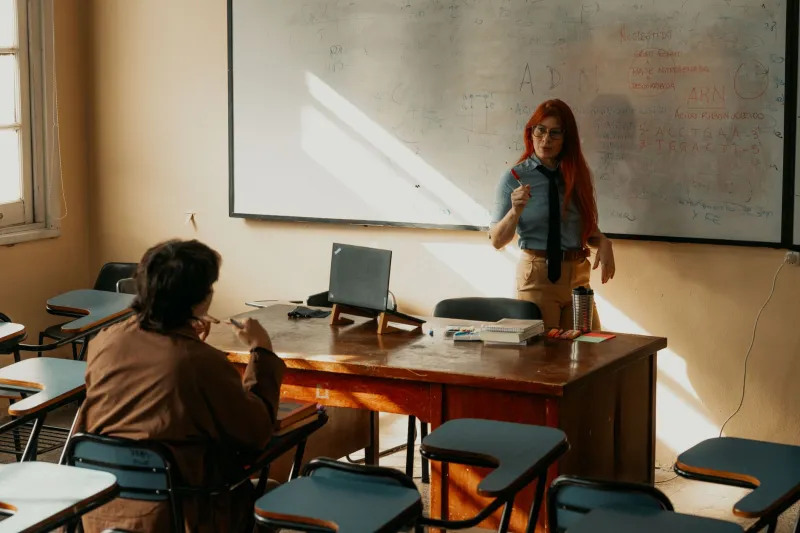
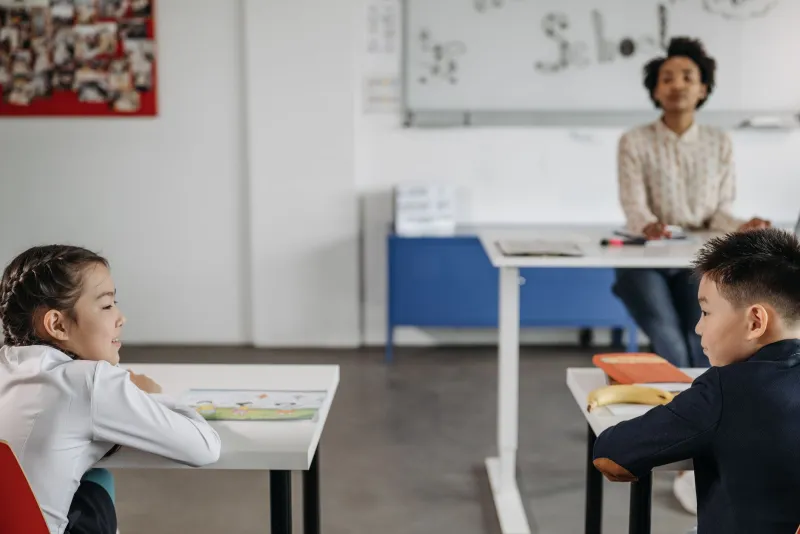
There is a moment that most American students know intimately: the teacher poses a question, a beat of silence follows, and the pressure to respond — any response — becomes almost physical. Hands shoot up. Words tumble out. Correctness, in those charged seconds, feels secondary to speed. The classroom moves on.
In Konya, Turkey, that moment unfolds very differently.
In the educational culture of this historically rich central Anatolian city, the pause after a question is not a void to be filled — it is an invitation to think. Teachers trained within Konya's long-standing pedagogical traditions understand that genuine inquiry requires patience, and that the most meaningful answers rarely arrive in the first few seconds of reflection. The result is a questioning method that is layered, deliberate, and profoundly effective at cultivating analytical reasoning.
For American educators grappling with declining critical thinking scores and rising student anxiety, Konya's approach offers more than inspiration. It offers a practical framework worth examining closely.
The Architecture of a Well-Asked Question
Konya's questioning tradition draws from a confluence of influences — among them the Socratic method as filtered through centuries of Islamic scholarly discourse, where teachers and students engaged in extended dialogue rather than rapid-fire exchange. In the medrese tradition, which shaped much of Konya's educational identity, a single question might anchor an entire session of learning. Students were not expected to answer immediately. They were expected to sit with the question, examine it from multiple angles, and return with a response that demonstrated genuine engagement.
This is fundamentally different from what educational researchers call the "IRE cycle" — Initiate, Respond, Evaluate — which dominates many American classrooms. In the IRE model, the teacher asks a question, a student responds, and the teacher evaluates the answer before moving to the next prompt. The entire exchange can last fewer than ten seconds. While efficient, this format tends to reward recall over reasoning, and confidence over comprehension.
Konya's layered questioning method, by contrast, builds questions in sequence. A teacher might begin with an observational prompt — What do you notice here? — before moving to an interpretive question, then a connective one, and finally a generative question that asks the student to extrapolate or create. Each layer depends on the previous one, and extended wait time between prompts is not just permitted — it is structurally embedded in the lesson design.
The Neuroscience Behind the Pause
Research in cognitive psychology supports what Konya's educators have long practiced intuitively. Studies on "wait time," pioneered by educator Mary Budd Rowe in the 1970s and repeatedly validated since, demonstrate that when teachers wait at least three to five seconds after posing a question, the quality of student responses improves markedly. Students offer longer answers, make more evidence-based claims, ask follow-up questions of their own, and demonstrate greater confidence in their reasoning.
Three to five seconds may not sound like much. But in the context of a typical American classroom, where average wait time hovers closer to one second, it represents a significant cultural shift.
The implications extend beyond individual responses. When students understand that they will not be penalized for taking time to think, anxiety-driven guessing decreases substantially. The reflexive habit of raising a hand before a thought is fully formed — a survival strategy in fast-paced classrooms — begins to dissolve. In its place, something more valuable emerges: the willingness to engage with difficulty rather than deflect it.
Anxiety, Guessing, and the Cost of Speed
The American classroom's emphasis on rapid response is not arbitrary. It reflects broader cultural values around productivity, efficiency, and visible engagement. A quiet classroom can feel, to both teachers and administrators, like a classroom that is not working. Silence reads as disengagement. Speed reads as mastery.
But this equation carries a hidden cost, particularly for students who process information more slowly, who are still developing confidence in a subject, or who are learning in a second language. When the pace of classroom questioning consistently outstrips the pace of genuine comprehension, students learn to perform understanding rather than develop it. They become skilled at approximating the right answer rather than arriving at it through authentic reasoning.
Konya's patient inquiry model challenges this dynamic directly. By treating extended silence as a sign of intellectual engagement rather than confusion or disinterest, educators signal to students that thinking — real thinking — takes time and is worth the wait. This shift in expectation alone can transform a student's relationship with difficult material.
Practical Pathways for American Educators
Adopting elements of Konya's questioning tradition does not require a wholesale restructuring of the American classroom. Even modest adjustments can yield meaningful results.
Introduce structured wait time. Commit to pausing for a full five seconds after asking a question before calling on a student. Communicate this practice to your class so students understand that the silence is intentional and productive.
Layer your questions deliberately. Design lesson questions in a sequence that moves from observation to interpretation to connection to creation. Resist the urge to jump to higher-order questions before students have had the opportunity to ground themselves in the foundational ones.
Normalize thinking aloud. In Konya's scholarly tradition, the process of reasoning is as valued as the conclusion. Encourage students to verbalize their thinking as it develops, even when — especially when — they are not yet certain of the answer.
Separate response time from evaluation. Allow students to return to a question later in the lesson or even in writing after class. The best answers do not always arrive in the moment a question is posed.
Reframe silence as scholarship. Explicitly discuss with students why thinking before speaking is a sign of intellectual rigor, not hesitation. Share examples of great thinkers — from scientists to philosophers — who described their best ideas as arriving only after extended periods of quiet reflection.
Depth Over Speed: A Different Measure of Success
At its core, Konya's layered questioning tradition rests on a conviction that is both ancient and urgently relevant: the purpose of a question is not to test whether a student already knows something, but to create the conditions under which they can come to know something more fully.
This is a distinction that American education, with its relentless emphasis on standardized assessment and measurable outputs, sometimes struggles to honor. Yet the outcomes Konya's method produces — students who reason carefully, tolerate ambiguity, and engage with complexity rather than retreat from it — are precisely the outcomes that employers, universities, and civic institutions say they most need from the next generation.
The silence between questions, it turns out, is not empty. It is where understanding is built.
For American students and educators willing to resist the pull of speed, Konya's patient inquiry tradition offers a quiet but powerful invitation: slow down, ask better questions, and trust that the most valuable answers are worth waiting for.