It Takes a Village to Raise a Scholar: The Case for Bringing Konya's Community-Centered Learning Into American Schools
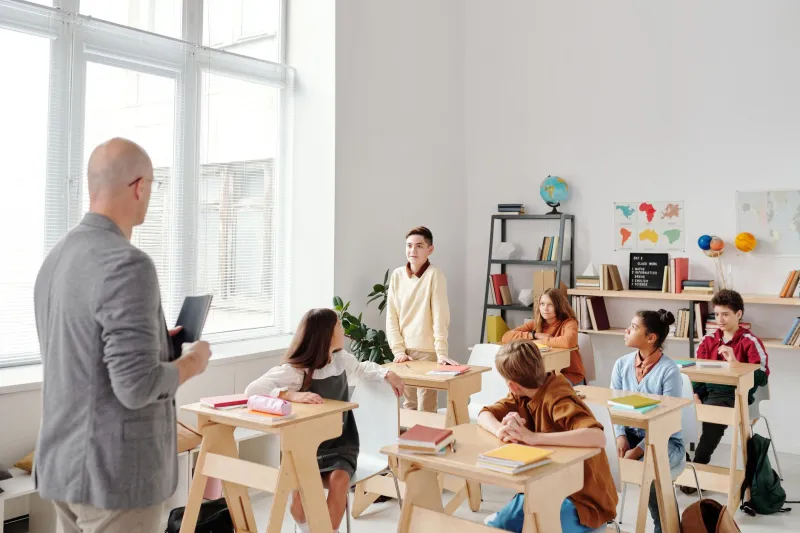
There is a quiet assumption embedded in the architecture of most American schools: that learning is a transaction between a certified teacher and a room full of age-matched students. The community beyond those walls — grandparents, local business owners, craftspeople, retirees with decades of professional experience — is largely left outside. This model is efficient, standardizable, and deeply limiting.
In Konya, Turkey's largest interior city and a place with a rich legacy of scholarship dating to the Seljuk period, education has historically operated on a different premise. Knowledge is not the exclusive property of credentialed professionals. It flows through families, neighborhoods, and community institutions. Elders transmit not only information but judgment. Parents are not passive recipients of report cards — they are considered active participants in the pedagogical process. This is not nostalgia for a pre-modern past. It is a living educational philosophy with measurable outcomes, and American schools would do well to examine it seriously.
The Architecture of Konya's Intergenerational Learning Culture
To understand what makes Konya's approach distinctive, it helps to consider its historical foundations. The city was home to the great Seljuk medrese institutions — centers of learning that deliberately blurred the boundaries between formal scholarship and community life. Scholars were expected to engage with merchants, artisans, and civic leaders. Knowledge was validated not only in the classroom but in its practical application to community problems.
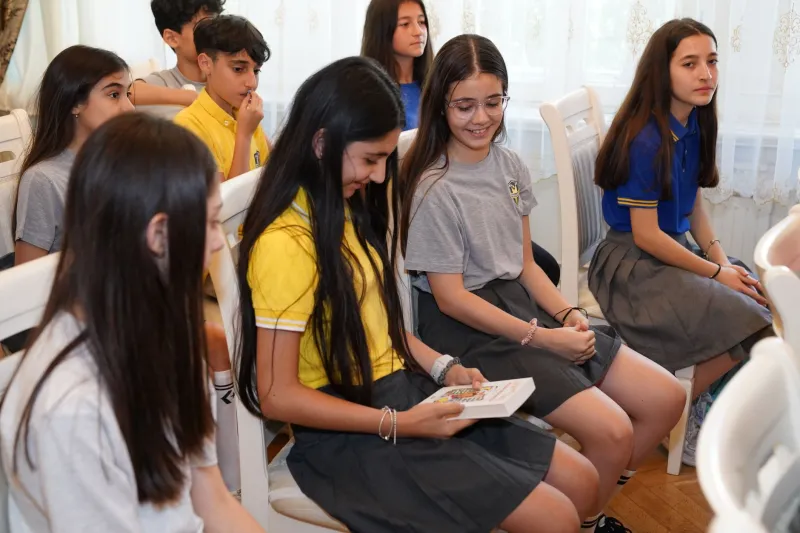
This tradition did not disappear with modernization. Contemporary Konya maintains strong cultural expectations around intergenerational knowledge transfer. Grandparents routinely assist with homework and transmit vocational knowledge. Community elders are invited into school settings to share historical memory and professional expertise. Parent involvement is not an optional extra — it is structurally expected and culturally reinforced.
The result is a learning environment in which students encounter knowledge from multiple vantage points simultaneously. A concept introduced by a teacher might be reinforced by a grandparent's lived experience, complicated by a craftsman's practical perspective, and applied in a community project that serves a genuine local need. This layered exposure produces a qualitatively different kind of understanding than any single classroom instruction can provide.
What the Research Says About Multi-Generational Learning
The intuitive appeal of this model is backed by a growing body of empirical research. A 2021 report from the Harvard Family Research Project found that students with consistent, structured involvement from family and community members across multiple contexts — not just at home, but within school programming — demonstrated significantly higher rates of academic persistence, stronger critical thinking skills, and greater reported motivation.
Separately, research on mentorship published in the Journal of Vocational Behavior found that cross-generational mentoring relationships — pairing younger students with adults outside their immediate family — produced measurable improvements in problem-solving capacity and career-relevant decision-making. Students who had access to non-parental adult mentors were better equipped to contextualize academic content within real-world frameworks.
Perhaps most compellingly, a 2020 Stanford University study on student engagement found that the single strongest predictor of sustained academic motivation was a student's sense of belonging within a broader community of purpose — not teacher quality, not school resources, not peer relationships alone. The Konya model, by embedding the student within a multi-layered web of relationships, directly cultivates exactly this sense of belonging.
Where American Schools Fall Short
The American educational system has made significant investments in teacher training, curriculum development, and technology integration. What it has systematically underinvested in is the relational infrastructure that surrounds the classroom.
Parent-teacher conferences happen twice a year. Grandparents appear at school events, if at all, as audience members rather than participants. Community professionals are occasionally invited for career day presentations — a single afternoon that barely scratches the surface of what sustained mentorship could provide. The implicit message sent to students is that the knowledge that matters is formal, credentialed, and contained within the school building.
This is a significant missed opportunity. American communities are rich with underutilized educational resources: retired engineers, veteran teachers now out of the workforce, multilingual elders, small business owners who navigate complex real-world problem-solving daily. The Konya model would ask schools to actively recruit these individuals as ongoing educational partners — not occasional guests.
What a Konya-Inspired Model Could Look Like in American Schools
Adopting the spirit of Konya's multi-generational approach does not require dismantling existing school structures. It requires expanding the definition of who counts as an educator.
Community Scholar Programs: Schools could establish structured roles for community elders and retired professionals to serve as regular classroom contributors — not substitutes for certified teachers, but supplements who provide contextual depth. A retired civil engineer discussing infrastructure during a geometry unit, or a local historian enriching a social studies lesson, transforms abstract content into lived reality.
Family Learning Cohorts: Rather than limiting parent involvement to fundraising and event attendance, schools could create structured family learning groups in which parents and guardians engage with curriculum content alongside their children on a monthly basis. This approach has shown success in pilot programs in Chicago and Los Angeles, where family cohort models improved both student attendance and parental investment in academic outcomes.
Cross-Grade Mentorship Pairings: Older students serving as consistent mentors to younger learners — a practice deeply embedded in Konya's educational culture — builds leadership skills in the mentor while providing relational support for the mentee. This is distinct from peer tutoring: the emphasis is on relationship and guidance, not simply academic content transfer.
Community Problem-Based Projects: Structured assignments that require students to interview community members, consult local experts, and present findings to a genuine public audience replicate the knowledge-validation dynamic that characterized Konya's historic medrese culture. Several progressive American school districts have adopted project-based learning frameworks with exactly this community orientation, with encouraging results.
The Deeper Argument
Beyond the practical mechanics, there is a philosophical point worth making directly. The dominant American educational paradigm treats learning as preparation for future participation in society. The Konya model treats learning as current participation in society. Students are not in training for eventual relevance — they are already members of a community that has something to teach them and something to receive from them.
This shift in framing has profound consequences for student motivation, identity, and resilience. When a young person understands that their intellectual development is a matter of community investment — that grandparents, neighbors, and local leaders are genuinely invested in their growth — the stakes of learning become personal in the best possible sense.
American schools have the raw materials to build this kind of educational ecosystem. What they need is the willingness to look beyond the classroom walls — and perhaps, toward a city in central Turkey that has been doing this quietly, and effectively, for centuries.