Learning in Season: What Konya's Rhythm-Based Academic Calendar Reveals About America's Retention Problem
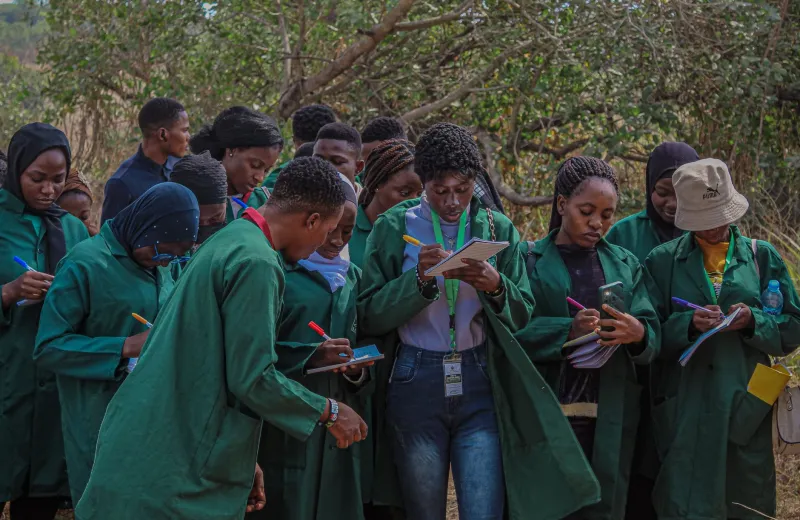
America's school calendar has a history that most educators know but rarely examine critically. The long summer break was not designed with student learning in mind. It was built around the harvest season, when rural families needed children available for agricultural labor. That was the 1800s. The calendar has changed remarkably little since.
Meanwhile, cognitive science has spent the last several decades accumulating evidence that human learning is not a uniform process—that attention, memory consolidation, creative thinking, and social engagement fluctuate meaningfully across seasons, and that educational systems which ignore these rhythms pay a measurable price in retention, motivation, and long-term academic performance.
In Konya, a city whose educational culture has been shaped by centuries of Islamic scholarly tradition, Sufi contemplative practice, and deep attunement to natural cycles, a different relationship between season and study has developed—one that American educators might find unexpectedly instructive.
Winter as the Season of Depth
In Konya's educational tradition, winter is not an obstacle to learning. It is an invitation to a particular kind of learning: inward, rigorous, and unhurried. The cold months have historically been associated with intensive textual study, memorization, and the kind of slow, repeated engagement with difficult material that builds genuine mastery rather than surface familiarity.
This intuition aligns remarkably well with what chronobiologists now understand about seasonal cognitive patterns. Research published in the Proceedings of the National Academy of Sciences found that human attention and working memory peak during winter months, when longer nights and reduced social stimulation naturally orient the brain toward focused, solitary cognitive work. The brain, it appears, is seasonally calibrated for depth during winter—precisely the kind of work that Konya's scholarly tradition has always assigned to it.
American schools, operating on a calendar that treats January and June as functionally identical instructional months, leave this natural advantage almost entirely unexploited. Students arrive in January after a two-week break, resume the same instructional pace they maintained in October, and move through material at a rate determined by the academic calendar rather than by their cognitive readiness.
Spring and the Community Classroom
If winter in Konya is the season of depth, spring is the season of application. As temperatures rise and community life reactivates, educational practice traditionally shifts outward—toward collaborative projects, community engagement, apprenticeship-style learning, and the kind of experiential work that consolidates the knowledge accumulated during winter's intensive study period.
This is not merely a cultural preference. It reflects a sophisticated understanding of how learning is consolidated and transferred. Cognitive psychologists use the term contextual variation to describe the well-documented finding that knowledge learned in multiple contexts—including social and physical environments beyond the classroom—is retrieved more reliably and applied more flexibly than knowledge anchored to a single setting.
Spring learning in Konya has historically provided exactly this kind of contextual variation. Students who spent winter studying agricultural science, for example, would move into spring applying that knowledge in community gardens or on family land. Students studying history would engage with local elders, visiting sites of historical significance within the region. The knowledge moved from the page into the world, and in doing so, it became genuinely owned rather than temporarily borrowed.
American schools occasionally approximate this model through field trips and service-learning projects, but these tend to be isolated events rather than expressions of a coherent seasonal pedagogy. The difference between an annual field trip and a seasonally structured learning philosophy is the difference between a vitamin and a diet.
The Summer Problem Reframed
American education has long recognized what researchers call the summer learning loss phenomenon—the well-documented regression in academic skills that occurs during the long summer break, disproportionately affecting students from lower-income households who lack access to enrichment programs. Billions of dollars are spent annually on summer school programs designed to remediate this loss.
Konya's seasonal model reframes this problem entirely. Rather than treating summer as a void that must be filled with remedial instruction, a seasonally attuned educational philosophy would ask: what is summer actually good for, cognitively and developmentally? What kind of learning is the season naturally suited to support?
The answer, supported by both developmental psychology and the empirical record of educational cultures that have taken seasonal variation seriously, is: integration, creativity, and exploratory thinking. Summer, with its longer days, reduced social pressure, and expanded sensory environment, is well suited to project-based learning, artistic exploration, physical skill development, and the kind of unstructured intellectual play that generates the novel connections that formal instruction rarely produces.
A school system designed around seasonal strengths would not ask students to do in summer what they do in winter. It would ask them to do something different—and it would recognize that difference as educationally valuable rather than academically suspect.
Practical Adaptations for American Schools
Reshaping the American school calendar to reflect seasonal learning principles does not require legislative overhaul. Several adaptations are achievable within existing structures.
Schools could designate winter trimesters as intensive deep-study periods, reducing the number of subjects covered simultaneously and extending the time allocated to each. Research on interleaving and spaced repetition suggests that this kind of depth produces better long-term retention than the broad, fast-paced coverage that standard semester structures incentivize.
Spring semesters could be restructured to emphasize project-based and community-embedded learning, with assessment frameworks that value synthesis and application rather than recall. This shift would not require new funding—it would require a philosophical reorientation toward what learning is for.
Summer programs, where they exist, could be redesigned around exploratory and creative learning rather than remediation, drawing on the cognitive research showing that play-based and curiosity-driven engagement produces durable skill development in ways that drill-based summer school does not.
The Calendar Is a Curriculum
Every school calendar encodes a theory of learning, whether or not its designers are aware of it. America's current calendar encodes a theory that learning is uniform, that all months are equivalent, and that the primary variable in academic success is the number of instructional days provided.
Konya's seasonal educational philosophy encodes a different theory: that learning is rhythmic, that the natural world is a pedagogical partner, and that wisdom lies in working with cognitive and environmental cycles rather than against them.
The evidence increasingly favors the second theory. The question for American educators is not whether seasonal attunement is a valid pedagogical principle—the research suggests it is—but whether the institutional inertia of a nineteenth-century calendar is a sufficient reason to keep ignoring it.