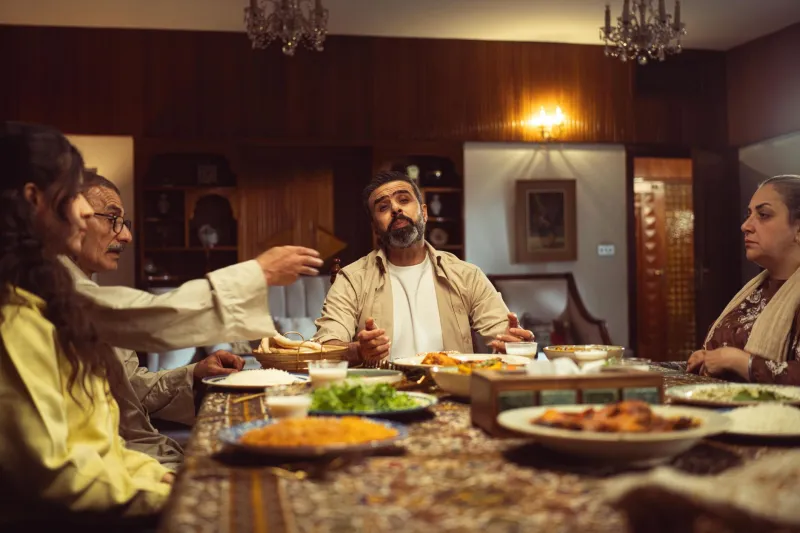
The Power of the Pause: How Turkish Listening Culture Could Calm America's Anxious Classrooms
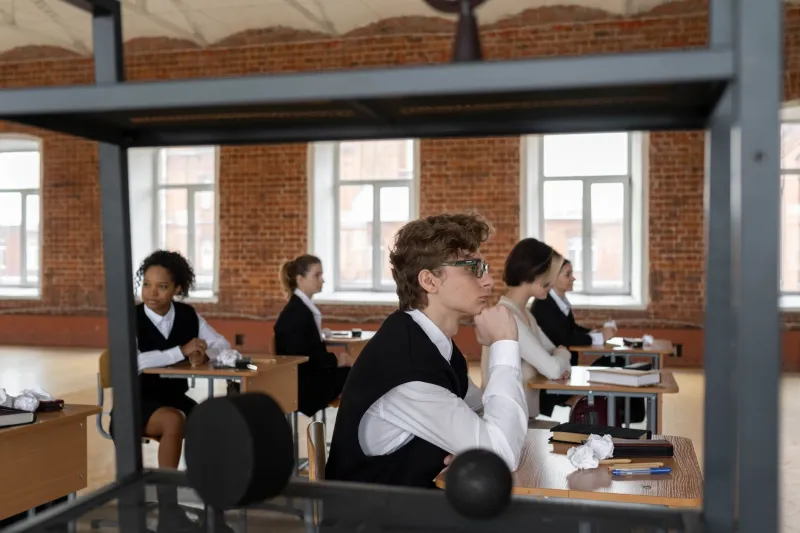
American classrooms are loud — and not always productively so. Participation grades reward the student who speaks first. Discussion formats privilege speed over depth. Teachers, under pressure to demonstrate student engagement to administrators, often interpret silence as disengagement. The result is a learning environment that, for many students, feels less like a space for thinking and more like a competition for airtime.
This is worth reconsidering. And the educational traditions of Turkey's Konya region offer a thoughtful place to begin.
Listening as an Active Discipline
In Turkish educational culture, particularly within the traditions that have shaped Konya's long history as a center of learning, attentive silence has never been confused with passivity. The region's scholarly heritage — rooted in centuries of formal study circles, Sufi philosophical traditions, and rigorous classical pedagogy — treats careful listening as a discipline in its own right, one that must be cultivated with the same intentionality as speaking or writing.
The concept is embedded in the Turkish language itself. The verb dinlemek, to listen, carries a weight and deliberateness that the casual English equivalent does not always convey. In traditional Konya learning settings, a student who listened deeply before speaking was not considered hesitant — they were considered prepared. The pause before a response was understood as evidence of respect for the question, not uncertainty about the answer.
This cultural orientation stands in meaningful contrast to the American classroom norm, where the first hand in the air is frequently the most rewarded.
What the Research Tells Us About Noise and Learning
The cognitive science here is unambiguous. Research on cognitive load theory, developed by educational psychologist John Sweller, demonstrates that the human brain has a finite capacity for processing information simultaneously. When students are expected to listen, formulate responses, monitor social dynamics, and signal engagement all at once, working memory becomes strained. Comprehension suffers. Anxiety rises.
A 2022 study published in the Journal of Educational Psychology found that students in high-verbal-participation classroom environments reported significantly higher levels of performance anxiety than those in settings that incorporated structured periods of quiet reflection. Crucially, the high-participation students did not demonstrate superior learning outcomes — they simply reported feeling more stressed.
Dr. Leila Jameson, a school psychologist who consults with districts across the Pacific Northwest, sees this dynamic play out repeatedly. "We have conflated talking with thinking," she said in a recent interview. "Some of our strongest thinkers are the quietest students in the room, and our current classroom culture actively penalizes them."
The Contemplative Classroom: A Turkish Model
What would a classroom shaped by Turkish listening culture look like in an American school? It would not be a silent room — that is not what this tradition advocates. Rather, it would be a space where silence is normalized as part of the learning cycle, where students are given time to absorb before they are asked to respond, and where the quality of a contribution matters more than its speed of delivery.
In many traditional Konya learning environments, a teacher poses a question and then waits — genuinely waits, without filling the space with hints or redirections — for students to formulate a considered response. This practice, which educational researchers call "wait time," has been studied extensively in Western pedagogy as well. Mary Budd Rowe's foundational research in the 1970s found that extending wait time from the typical one second to just three to five seconds produced dramatic improvements in the length, complexity, and accuracy of student responses. Yet the practice remains underused in American schools, where silence in a classroom is still widely perceived as a sign that something has gone wrong.
Attention, Anxiety, and the Case for Stillness
The timing of this conversation matters. The American Psychological Association's most recent survey of student mental health found that academic anxiety now affects approximately 61 percent of college students, with high school rates trending similarly upward. Attention-related difficulties — whether formally diagnosed or simply the product of overstimulated, distracted minds — are increasingly cited by teachers as among their most pressing classroom challenges.
Therapists and educational psychologists have proposed many interventions: mindfulness apps, flexible seating, sensory breaks. These are not without merit. But they tend to treat the symptoms rather than the structural conditions that produce them. A classroom culture that builds in contemplative pauses, that honors the student who reflects before speaking, and that does not treat quiet as a problem to be solved addresses the root issue more directly.
Rachel Torres, a middle school English teacher in San Antonio who spent a year teaching in Turkey through an international exchange program, returned with a transformed perspective on classroom management. "The students I taught in Turkey were not passive," she said. "They were intensely engaged. But they had been taught that engagement meant listening fully, not performing participation. When I brought that expectation back to my classroom in Texas, the whole atmosphere shifted. Students seemed less anxious. The discussions, when they happened, were richer."
Practical Strategies for American Teachers
For educators who want to introduce elements of contemplative listening culture into their classrooms, the following approaches are grounded in both Turkish pedagogical tradition and current educational research.
Structured wait time. After posing a question, commit to waiting a full five seconds before calling on a student. Announce this practice explicitly so students understand that the silence is intentional and that they are expected to use it.
Reflective journaling before discussion. Before any verbal exchange, ask students to write for two to three minutes in response to a prompt. This mirrors the Turkish tradition of internal processing before external expression and gives quieter students an equal foundation from which to contribute.
Listening evaluations. Rather than grading only verbal contributions, assess students on the quality of their listening — through follow-up summaries, peer feedback forms, or reflection prompts that ask students to articulate what they heard, not just what they said.
Designated quiet processing time. Build short, structured periods of silence into each class session, framed not as punishment or dead time but as a valued cognitive tool. Normalize the phrase "I need a moment to think" as an academically respectable response.
Rethinking What Engagement Looks Like
The deeper shift this approach requires is cultural rather than logistical. American education has long associated visible, verbal activity with learning and silence with its absence. Turkish educational tradition, refined over centuries in institutions like those that have shaped Konya's intellectual heritage, offers a corrective: that the most powerful learning often happens in the space between words.
For a generation of American students navigating unprecedented levels of stress, distraction, and cognitive overload, the invitation to pause — to truly listen before speaking, to honor the pause as productive rather than empty — may be among the most practical and compassionate educational reforms available. It costs nothing to implement. The evidence supports it. And classrooms across Konya have been demonstrating its value for generations.