Sitting With the Unknown: How Konya's Philosophy of Intellectual Discomfort Can Reshape American Education
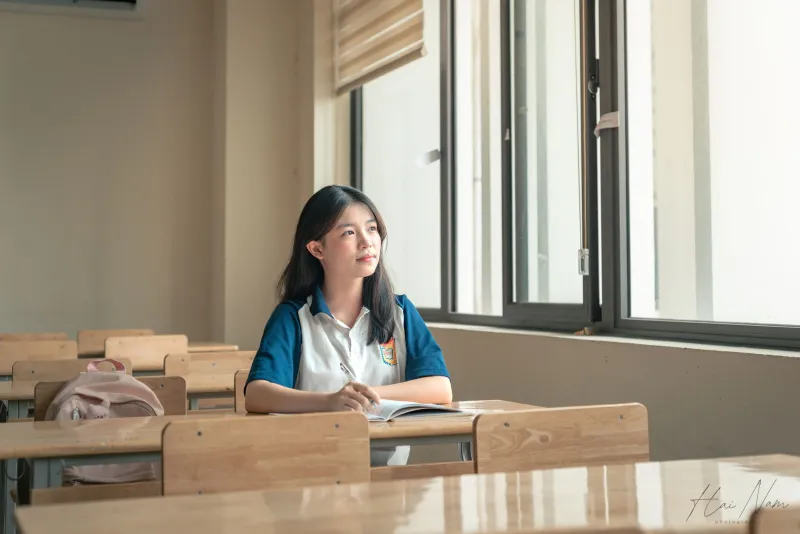
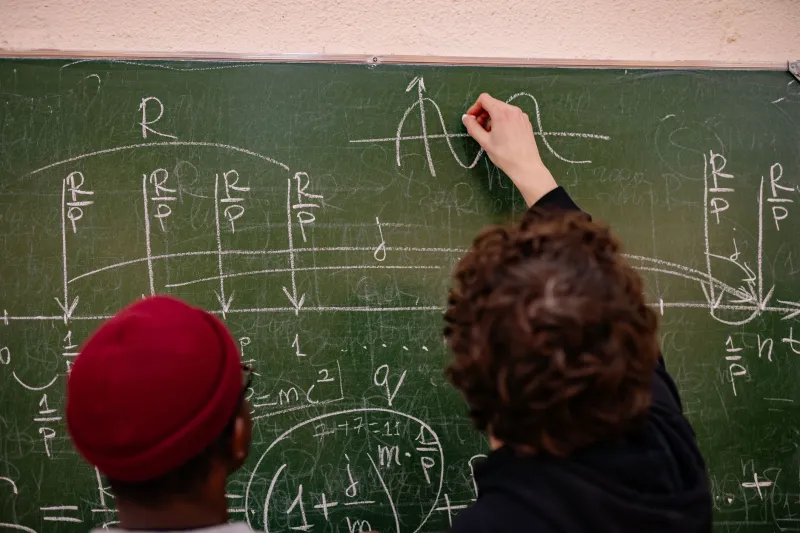
There is a particular kind of silence that descends in a Konya classroom — not the silence of boredom or inattention, but something far more purposeful. It is the silence of a student wrestling with a concept that has not yet yielded, turning an idea over and over like a stone in a river, waiting for its edges to become clear. In Turkish educational tradition, especially as it has been cultivated in Konya's scholarly institutions for generations, this silence is not a problem to be solved. It is the learning itself.
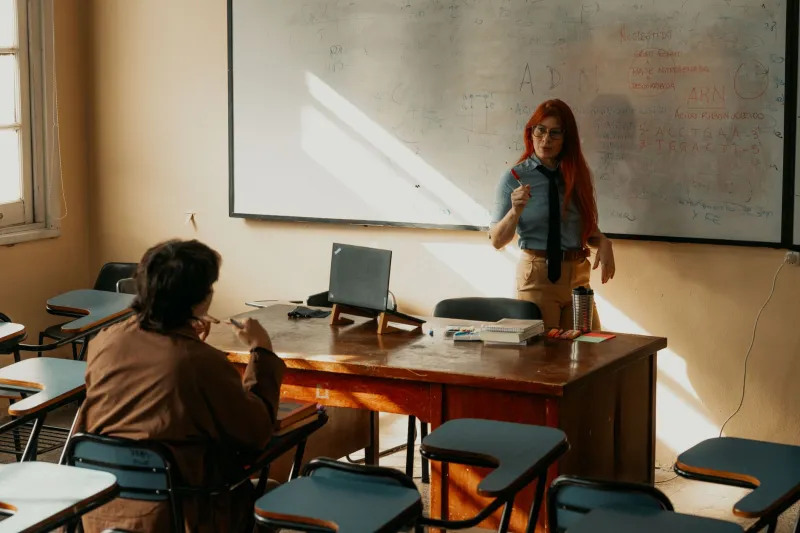
Compare that image to a typical American classroom in 2024. A hand goes up within seconds of a question being posed. If no answer comes quickly, restlessness follows — from students, sometimes from teachers, and almost always from the broader system that measures success in response times and correct answers per minute. The architecture of American education, shaped heavily by standardized testing culture, has inadvertently trained students to fear the pause. And in doing so, it may be robbing them of one of the most essential academic skills they will ever develop.
What Konya's Scholars Understood That Modern Education Forgot
Konya has long been a city of deep intellectual heritage. As the home of Rumi and a historic center of Islamic scholarship, it cultivated a learning philosophy rooted not in the rapid accumulation of facts, but in the patient unfolding of understanding. In the medrese tradition, students were expected to sit with texts, questions, and contradictions for extended periods before arriving at conclusions. The teacher's role was not to rescue a struggling student from confusion, but to accompany them through it.
This is not merely a romantic historical anecdote. It reflects a sophisticated understanding of how the human mind actually learns. Cognitive scientists today refer to the same phenomenon as "productive struggle" — the state in which a learner is challenged just beyond their current competency, requiring genuine mental effort to bridge the gap. Research consistently shows that students who work through difficulty without immediate intervention retain information longer, develop more flexible problem-solving strategies, and demonstrate greater academic resilience over time.
Konya's educators did not have brain imaging technology. But they understood something empirically: the student who earns an answer through effort owns it in a way that the student who receives it never quite does.
The American Comfort Trap
Across the United States, a well-intentioned but ultimately counterproductive instinct has taken root in classrooms: the impulse to make learning feel comfortable. This manifests in scaffolding that removes too much challenge before students even encounter it, in teachers who jump in the moment a student hesitates, and in a cultural narrative that equates struggle with failure rather than progress.
The consequences are measurable. American students frequently report high anxiety when faced with open-ended problems, particularly in mathematics and analytical writing — two domains that inherently require sitting with uncertainty. Studies from the National Center for Education Statistics have noted persistent gaps in higher-order thinking skills, even among students who perform adequately on standardized assessments. Knowing how to select a correct answer from four choices is a fundamentally different cognitive task than constructing an argument from incomplete information.
Worse, the discomfort avoidance that begins in classrooms follows students into college and careers. Employers consistently cite the inability to tolerate ambiguity and work through complex, unstructured problems as a critical deficiency in recent graduates. The classroom experience has not prepared them for the reality that most meaningful work begins precisely where the easy answers run out.
Reframing Struggle as a Pedagogical Asset
Adopting Konya's philosophy does not mean withholding support or leaving students to flounder without guidance. The distinction is subtle but crucial: it is the difference between strategic patience and neglect. Productive struggle requires a teacher who is deeply present — observing, asking probing questions, acknowledging the difficulty without dissolving it prematurely.
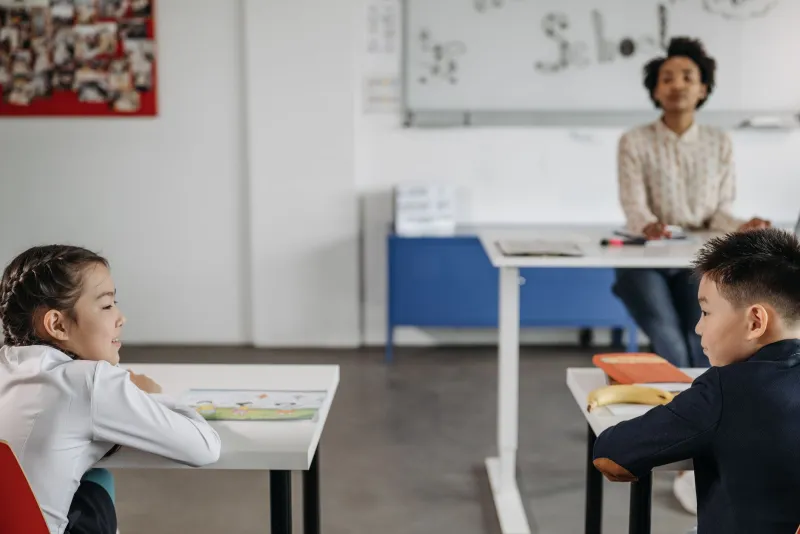
In practice, this looks like a math teacher who, when a student is stuck, asks "What have you tried so far?" rather than demonstrating the next step. It looks like an English teacher who allows a draft to remain imperfect through an entire class period, trusting that the student's discomfort with the weak paragraph will generate more insight than a red pen ever could. It looks like a science classroom where a failed experiment is greeted with genuine curiosity rather than corrective instruction.
These are not radical pedagogical departures. They are deliberate choices to honor the process of thinking rather than only its outputs.
Practical Strategies for American Educators
Implementing this philosophy does not require overhauling an entire curriculum. It begins with small, intentional shifts in how classrooms are structured and how teachers respond to student difficulty.
Extend wait time dramatically. Research by education scholar Mary Budd Rowe found that increasing the pause after posing a question from the typical one second to three to five seconds significantly improves the quality of student responses. Silence is not empty — it is working time.
Normalize the language of not-yet-knowing. Build classroom culture around phrases like "I'm still working through this" and "I'm not sure yet, but here's what I'm thinking." When teachers model intellectual humility openly, students understand that uncertainty is a natural stage of learning, not a personal failure.
Design tasks with intentional ambiguity. Rather than always providing clear, step-by-step instructions, occasionally present problems that require students to determine their own approach. This mirrors the real-world conditions in which genuine thinking is demanded.
Resist the rescue reflex. When a student appears stuck, count silently to ten before intervening. More often than not, the student will find a foothold — and that self-generated moment of traction is worth far more than a teacher-provided bridge.
Debrief the struggle explicitly. After a challenging task, spend time discussing not just what students learned, but how it felt to not know, and what strategies they used to push through. Metacognitive reflection transforms struggle from an unpleasant experience into a recognized skill.
What This Means for the Learners of Konya and Beyond
At Konya Eğitim, our mission has always been to connect the rich educational traditions of the Konya region with learners and educators who are seeking something more than surface-level academic performance. The philosophy of productive struggle is not a technique imported from a distant era — it is a living practice, embedded in how thoughtful teachers in Konya have approached their students for centuries.
American education is at an inflection point. As artificial intelligence increasingly handles the retrieval and presentation of information, the distinctly human capacities — for nuanced reasoning, for tolerating ambiguity, for thinking through problems that have no single correct answer — become the most valuable skills a student can possess. These are not skills that can be downloaded or shortcut. They are built in the silence between questions, in the moments when the answer hasn't arrived yet and the student chooses to keep thinking anyway.
Konya's educators understood this long before it became a research-backed consensus. Perhaps it is time for American classrooms to listen to that silence — and learn what it has always been trying to teach.